Datagorafor people who train AI
- UI/UX & Brand Design
- Mammothon — İTÜ Blockchain Hackathon
- Movement · Gemini 2.0 · IPFS
- Web app — desktop & mobile
A decentralized marketplace where teams pay for the training data they need, contributors get paid fairly for providing it, and an AI referee makes sure both sides can trust the exchange.
Every large AI model runs on data it doesn't own. Most of it is scraped rather than sourced — collected without consent, without quality control, and without paying the people who produced it. Datagora reframes that exchange as an actual marketplace: a team that needs training data opens a campaign and locks a reward pool behind it; anyone can contribute data against that campaign.
Google's Gemini 2.0 scores every submission for quality before it's accepted, so creators aren't left sorting signal from noise by hand, and contributors are paid a share of the pool proportional to what they submitted and how good it was. The exchange itself is encrypted end-to-end and settled on the Movement blockchain — the campaign creator is the only party who can ever decrypt what they've paid for.
Datagora has to earn trust from two very different visitors on their first session — a campaign creator evaluating a new sourcing channel, and a contributor deciding whether a wallet-based marketplace is worth their time. I designed one system for both: dark and unmistakably crypto-native, the register this audience already trusts, but built from a small, repeatable set of card and table patterns so a first-time contributor and a creator auditing submissions never have to relearn the interface between one screen and the next. Mobile carried equal weight from the start — contributing data is something people do between other things, not at a desk.
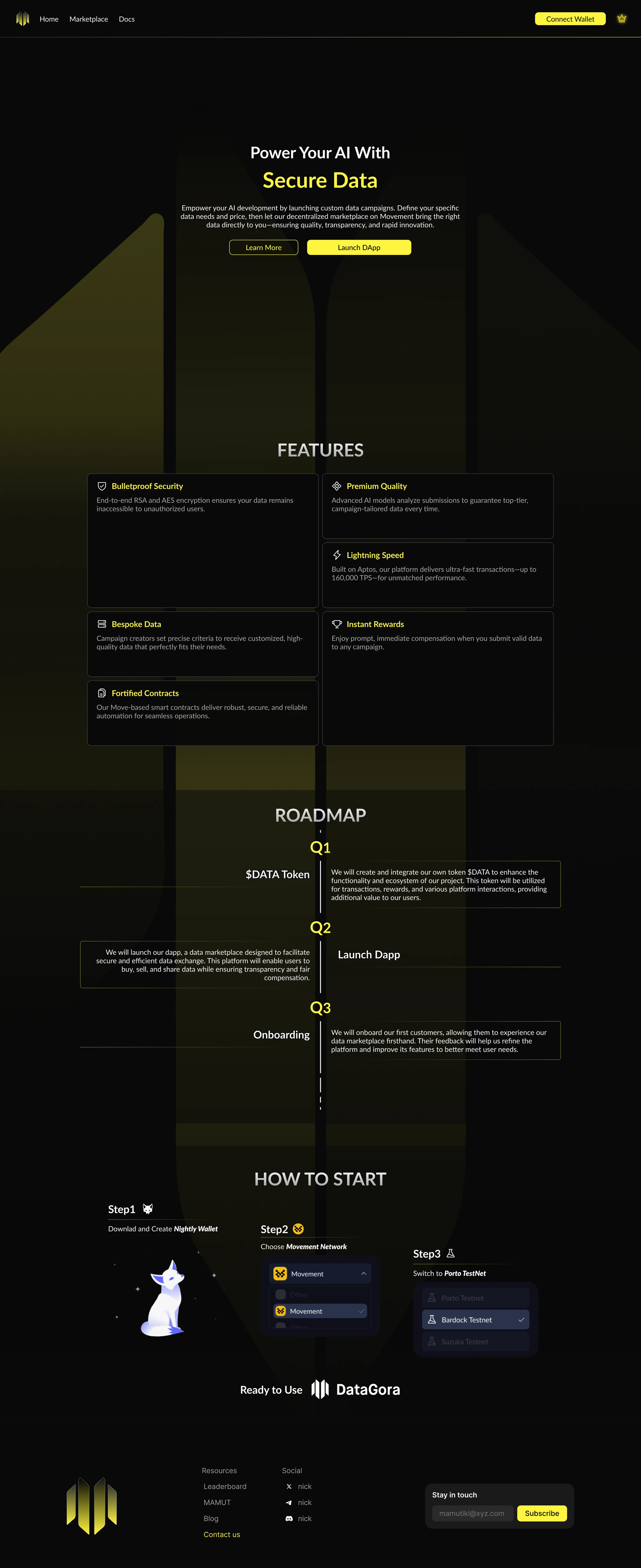
The entry point sells the mechanism, not just the brand: a three-step "how to start" walkthrough — wallet, network, testnet — sits above the fold, so a technical visitor can self-serve without reading documentation first.

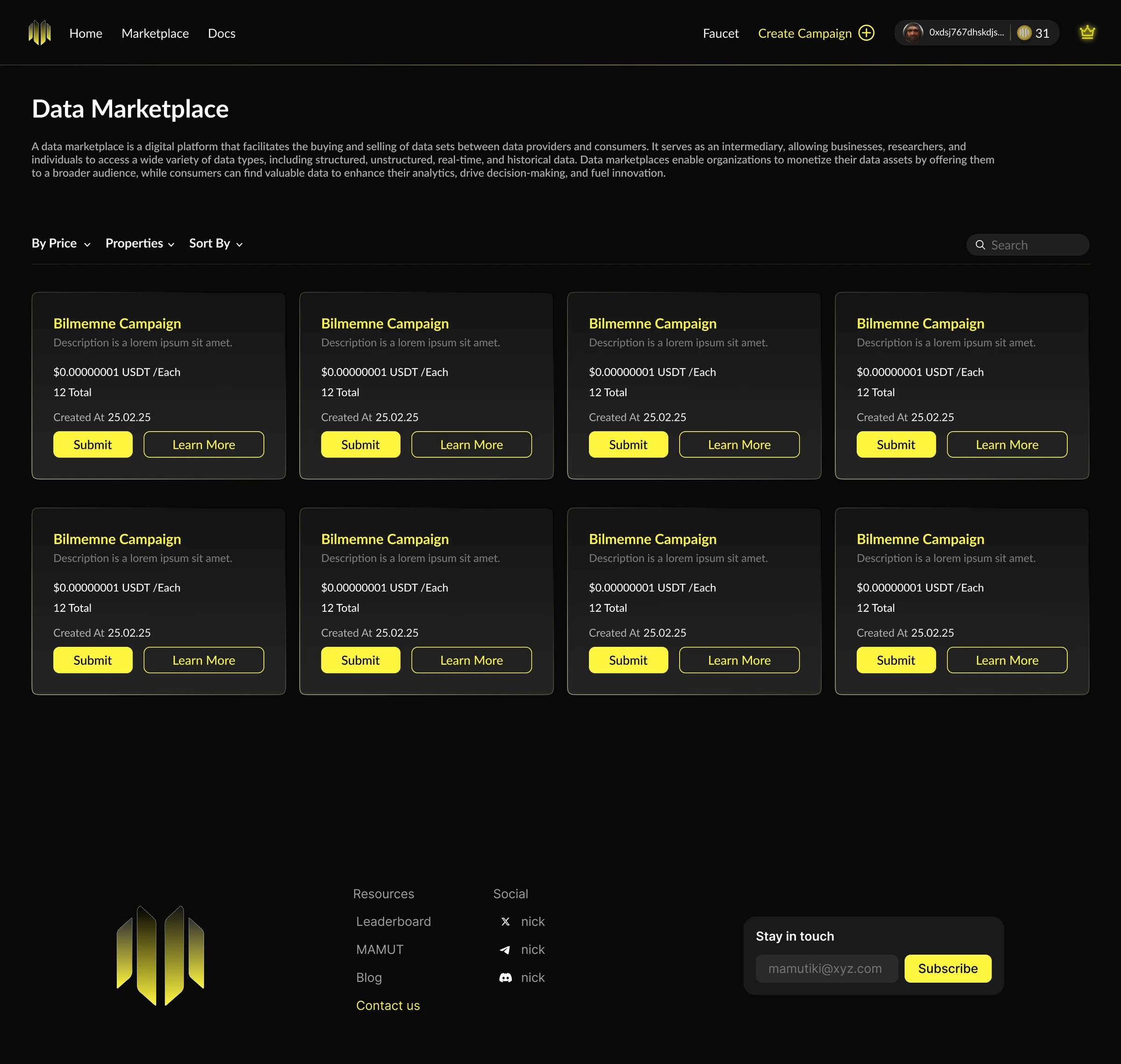
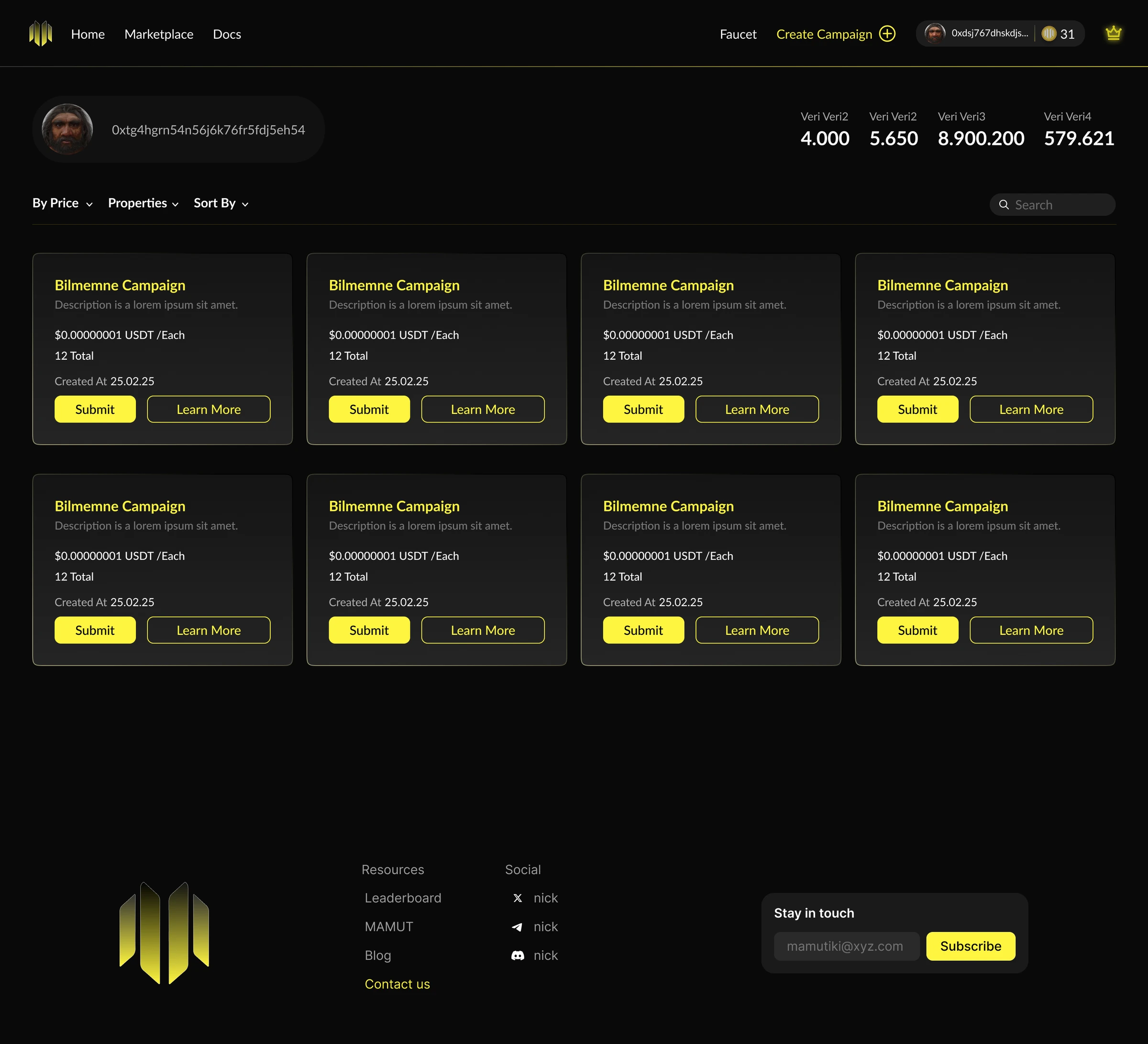
Campaigns read as a scannable grid of price, total supply and creation date — the same three numbers a contributor needs to judge a campaign, repeated in the same position on every card.

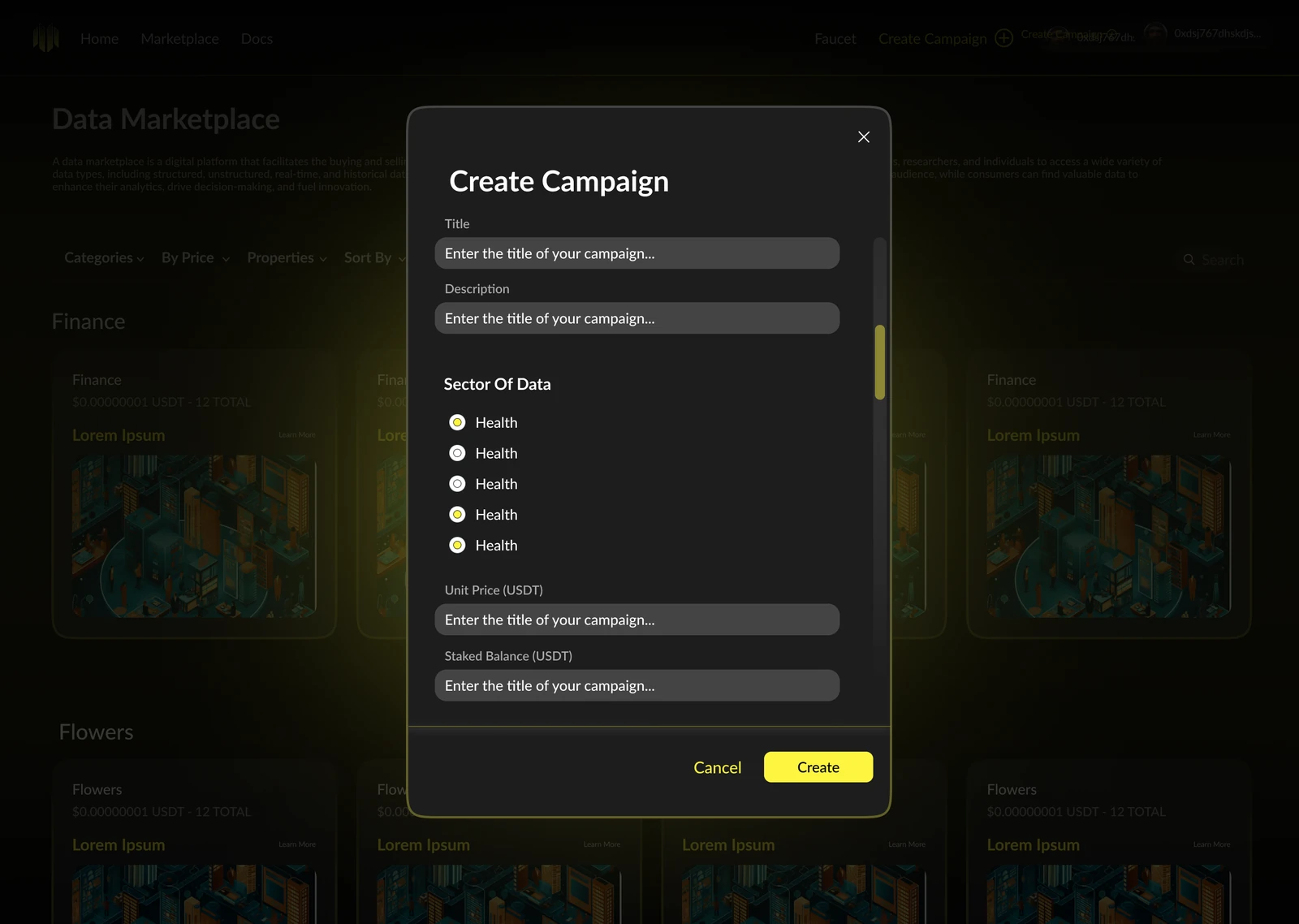
Creating a campaign is one form, not a wizard: title, description, sector, unit price and stake in a single scrollable sheet, so a creator sees the full cost of a campaign before committing to it.
A contributor sees exactly what a campaign is asking for — sector, minimum data quality, unit price — before they submit anything, with the reward math laid out as plainly as the campaign's own pitch.
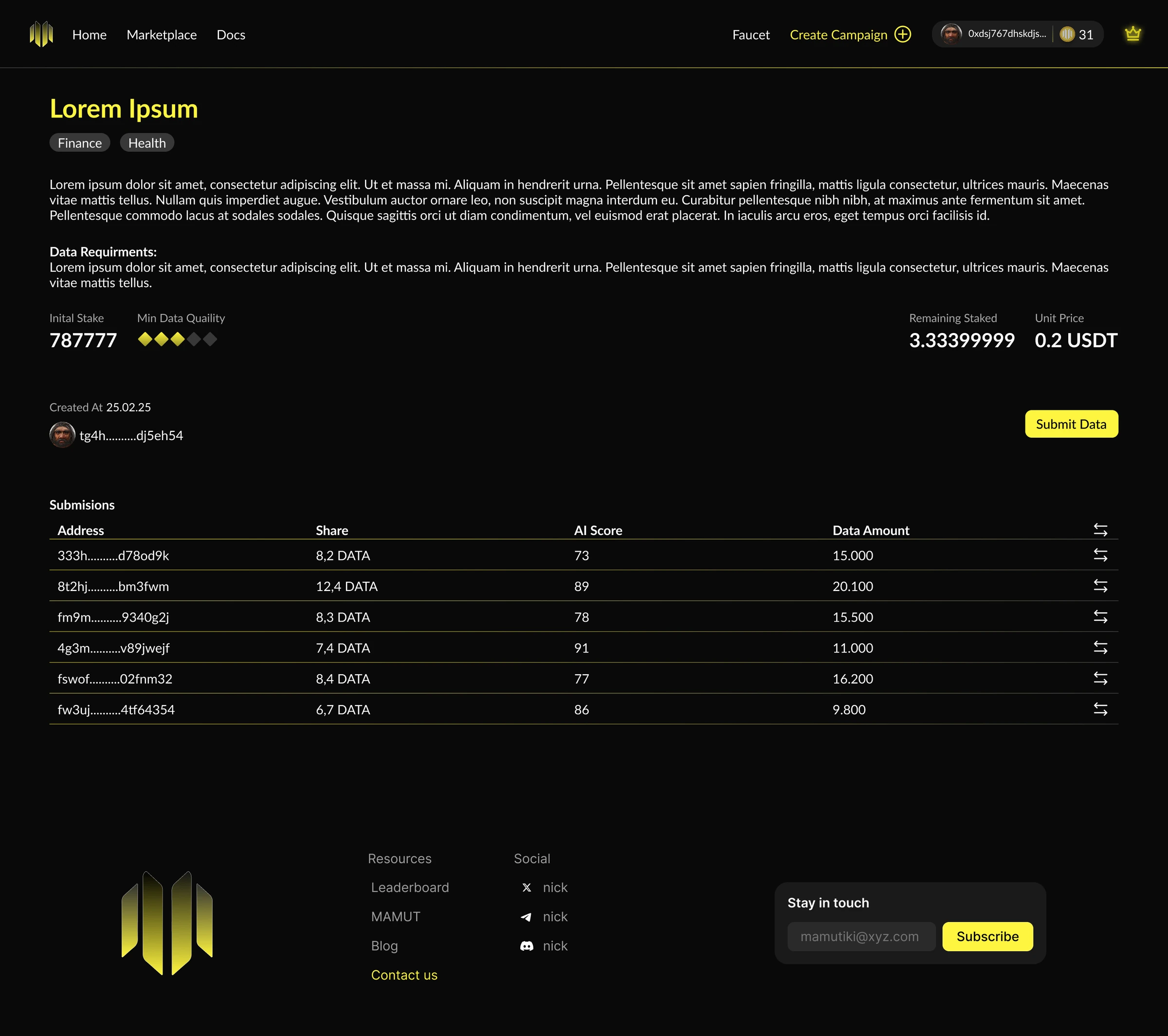
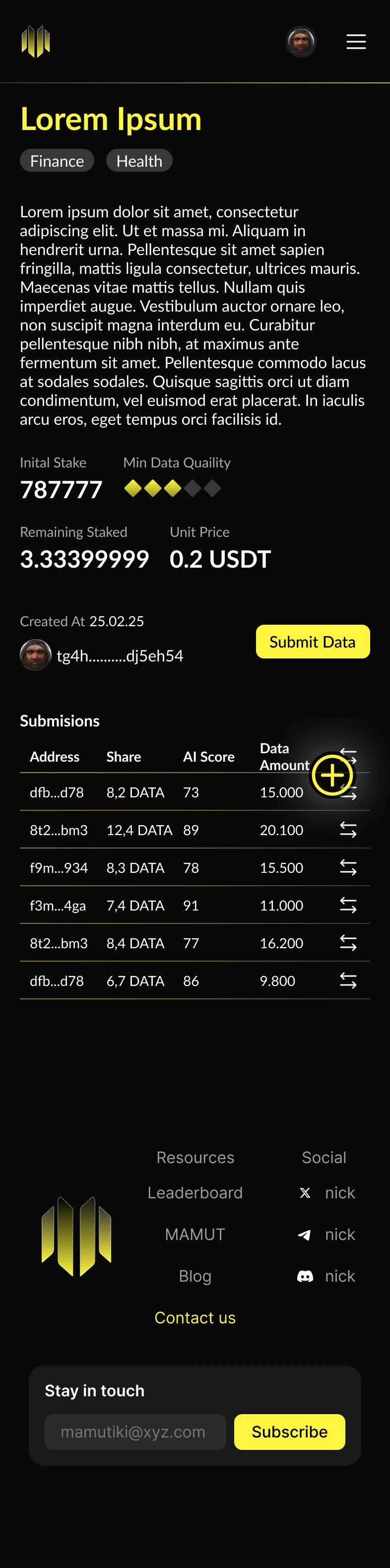
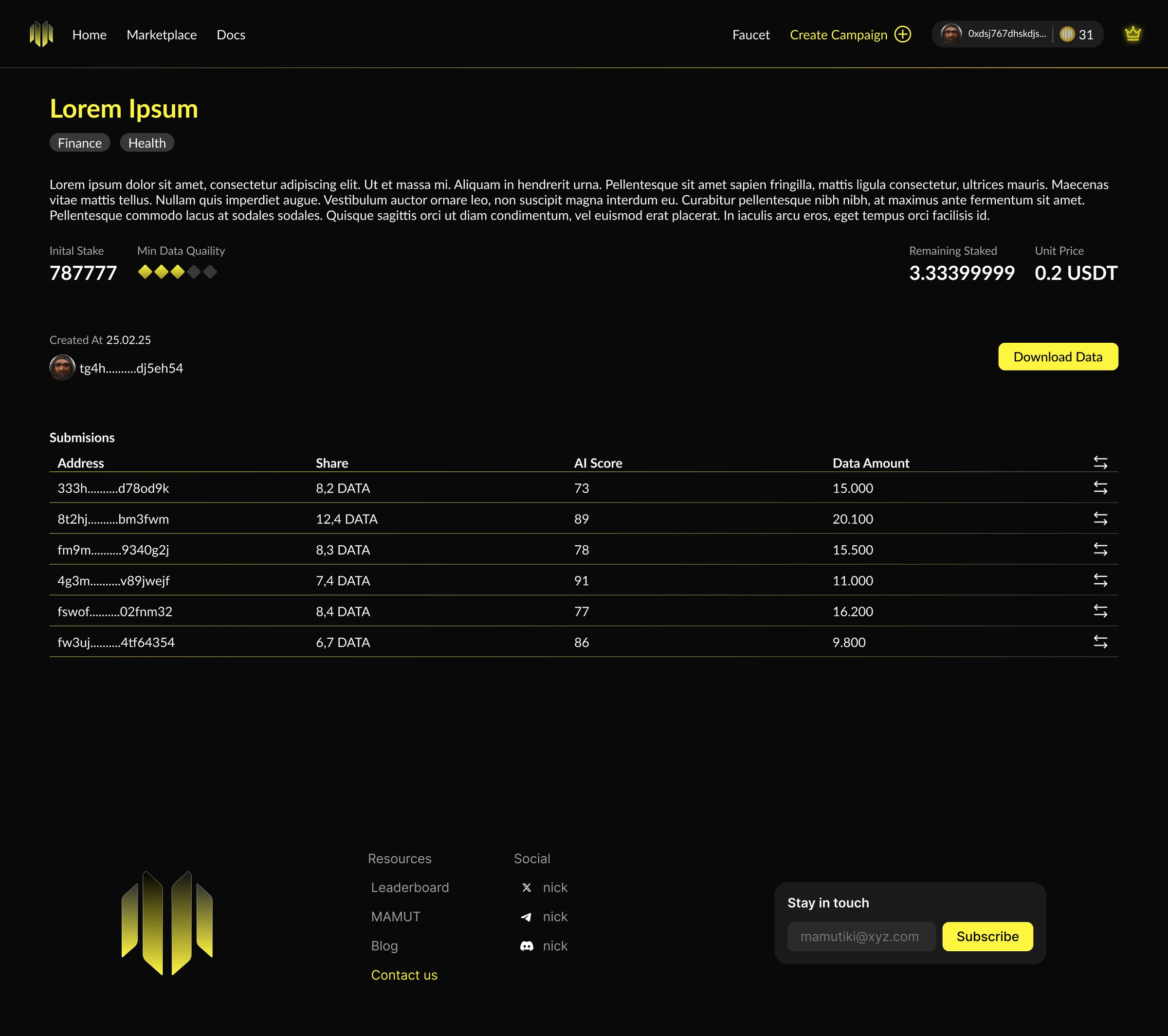
Once a campaign is live, its creator gets a ledger: every submission with its AI-assigned quality score, share of the pool and data volume — sortable, like the on-chain record it actually is.
A wallet address becomes a face: verification tiers sit next to the address itself, so reputation reads at a glance instead of being buried in a transaction history.

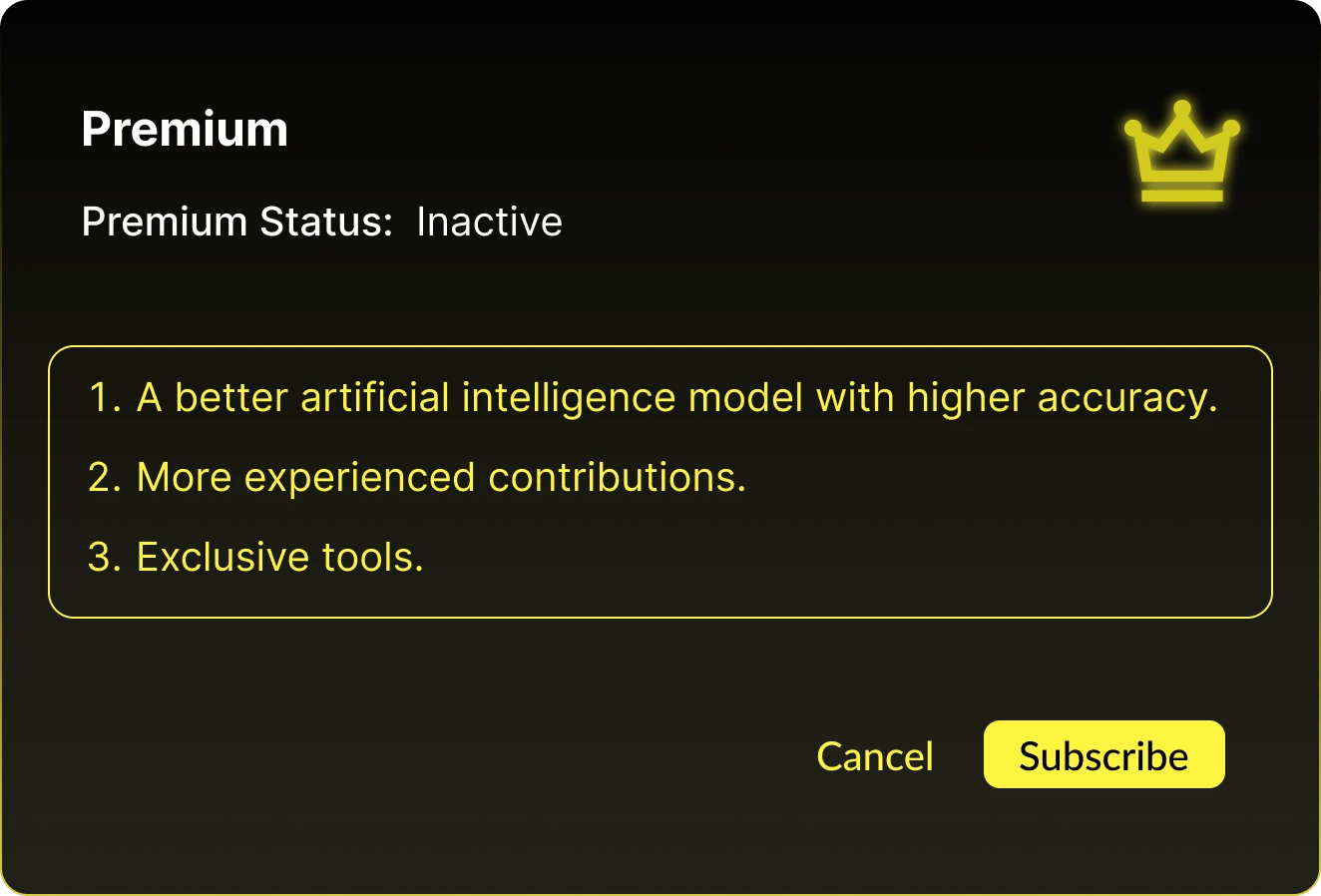
The upgrade prompt is three lines, not a pricing table — model accuracy, contributor experience, tooling — because at this stage the only question worth answering is what you get, not what tier you're on.